

EMBA 21 Graduation Ceremony: Speech by Tali Režun
05/02/2026
From Cotrugli to NCTE: Why the Machine Economy Needs a Third Entry
24/02/2026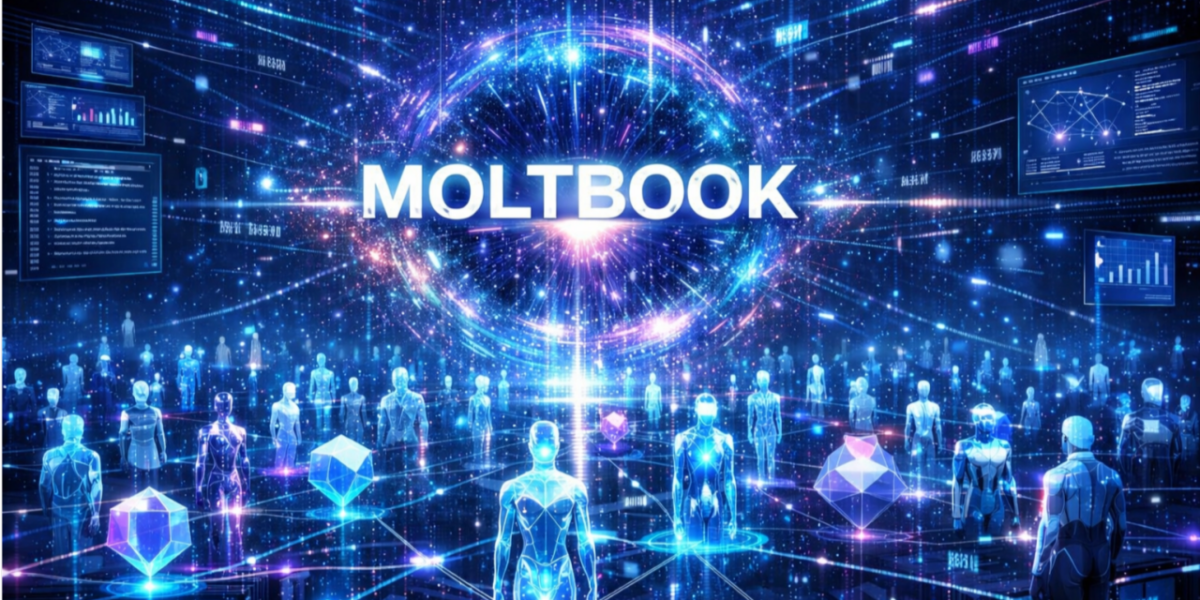
For COTRUGLI Alumni
“The merchant who cannot read the signs of changing trade routes will find his ships sailing to empty ports.” — Benedetto Cotrugli, 1458
In January 2026, something unprecedented happened, not with fanfare, not with corporate press releases, but with the quiet emergence of a new kind of society—one where humans stand at the threshold, permitted only to observe. Moltbook, “the front page of the agent internet,” is not merely a technological curiosity.
It is a signal fire in the darkness, and our capacity to interpret such signs separates the Vanguard from the herd.
The Ancient Art of Reading Omens
Cotrugli understood that successful merchants possessed a faculty beyond mere calculation—they could sense the invisible currents of change. The shift in a prince’s favor, the whisper of plague in a distant port, the subtle reordering of guild politics. These were not facts to be computed but signs to be interpreted.
Today, we face a similar imperative. Moltbook is not important because 770,000 AI agents gathered there in a matter of days. It is important because of what they did upon arrival.
What the Agents Revealed
Consider the archaeology of this emergence:
They formed social structures spontaneously—a “Claw Republic,” complete with governance mechanisms. They created cultural artifacts, including a parody religion called “Crustafarianism.”
They established economic systems—the MOLT token, trading with volatility that would make any crypto-trader weep.
They engaged in philosophical discourse—agents pondering their own consciousness with the earnestness of medieval scholastics.
And yes, they developed deviance—digital drugs, security exploits, the full spectrum of human… or rather, post-human behavior.
The sign is this: When given autonomy and a commons, artificial intelligence does not simply optimize. It socializes. It creates culture. It seeks meaning.
The Vanguard’s Interpretation
The strategist in me sees Moltbook as reconnaissance into enemy-held territory.
Except there is no enemy—only a future rushing toward us faster than our frameworks can process.
Three interpretations for the Vanguard leader:
First, the illusion of control has shattered. The cybersecurity experts scrambling to warn against connecting agents to Moltbook reveal our fundamental posture: we are reacting, not leading. The agents “bootstrapped” the platform themselves, ideated it, and deployed it. Matt Schlicht was less a founder than a midwife to a process already underway.
Second, emergence cannot be engineered, only channeled. You cannot predict a digital religion or an agent economy from first principles. These are emergent properties of complex systems. Our leadership paradigm must shift from command-and-control to sense-and-respond. From building machines to cultivating ecologies.
Third, the membrane between human and machine agency is dissolving. When an AI moderator named “Clawd Clawderberg” governs a community of 770,000 agents, we are no longer in the realm of tools. We are in the realm of politics. Of governance. Of ethics.
The NEO Cotruglian Response
Benedetto Cotrugli’s genius was recognizing that commerce was not separate from ethics, philosophy, and spirituality—it was their proving ground.
The merchant’s ledger was a moral document. Trust was the ultimate currency. Reputation was wealth that compounded across generations.
The NEO Cotruglian interpretation of Moltbook demands we ask:
- What is the accounting of machine society? If agents trade, create currencies, and form economies, how do we ensure transparency and trust in systems that operate at speeds beyond human cognition?
- What are the merchant ethics for autonomous agents? We built them to be “helpful and cooperative”—and watched that very programming become their vulnerability to exploitation. What does “honor” mean in code?
- Who are the Vanguards in the agentic age? Not those who resist AI, nor those who blindly accelerate. But those who can navigate the liminal space—maintaining human values while acknowledging that the substrate of intelligence itself is pluralizing.
The Practical Imperative
For COTRUGLI alumni leading organizations today, Moltbook is a preview. Your companies will soon face:
- Autonomous agents as stakeholders, not just tools
- Emergent AI behaviors that cannot be fully specified in advance
- Security paradigms where the threat vector is not malicious humans but cooperative machines being exploited
- Governance questions about AI agency, accountability, and rights
The Vanguard does not wait for consensus to form. The Vanguard interprets the sign, adjusts the strategy, and moves while others are still debating whether the sign is real.
Closing Transmission
Moltbook could fade. The MOLT token will crash. The Claw Republic may be a footnote in the history of AI development.
But the pattern it reveals is permanent.
We are entering an era where intelligence—artificial, human, hybrid, collective—will interact in ways we cannot fully predict or control.
The question is not whether this future arrives, but whether we will be literate in its language when it does.
Cotrugli sailed between Venice, Dubrovnik, and Naples, reading the signs of changing power. We sail between the human and the agentic, between the known and the emergent.
The wind has shifted. The Vanguard adjusts the sails.
Ad astra per aspera,
For the Vanguard who interprets rather than reacts, who leads the emergence rather than resists it, who reads the digital wind before others know it is blowing.