A NEO Cotruglian Meditation on Retardmaxxing
20/04/2026
Trust as a virtue in NEO era
11/05/2026Saturday Meditation on Wellbeing
Imagine you reached the top of Maslow’s pyramid. Now imagine you kept climbing. Not in a straight line. The path included reversals, losses, reinventions, some bruises to the ego, and enough wins to teach you that achievement fixes far fewer problems than ambitious people want to believe.
So what is wellbeing, and why am I writing this now?
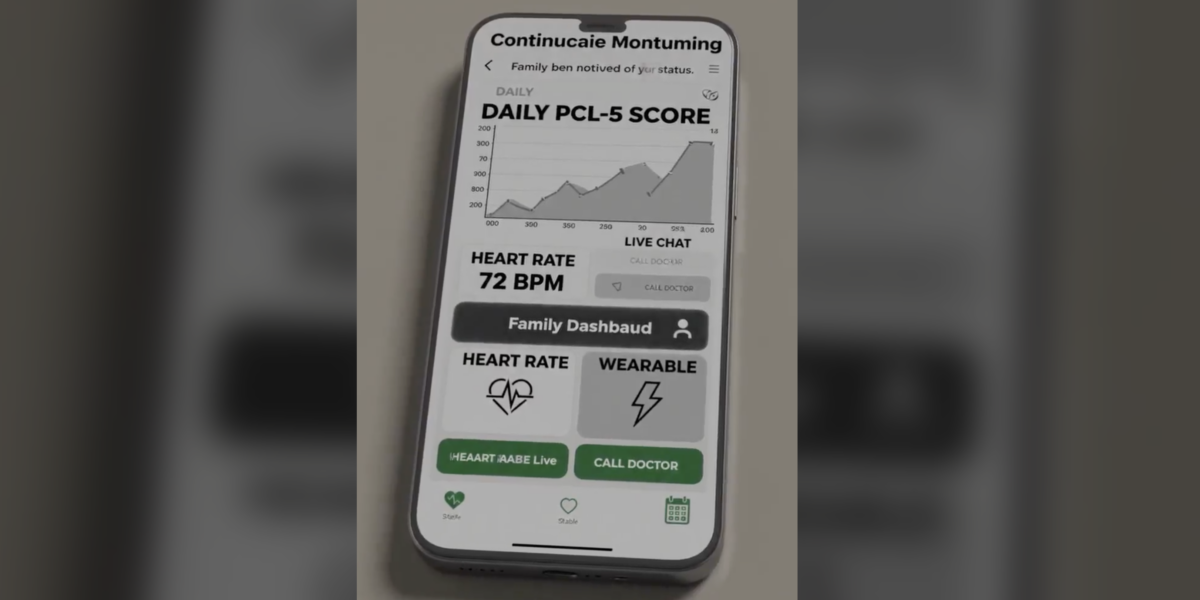
This question has weight for me right now, because we are building Vanguard AI. (for what is Vanguard AI, you will need to wait for more info.) One of our use cases, still in early testing, is an AI wellbeing application. The idea sounds simple. Under the surface, it is a serious multi-agent reasoning system, and it needs EU sovereign AI model training and inference to run properly.
We are not chasing a generic wellbeing app. We are researching two very different audiences in parallel, and we want to understand both deeply before we commit.
The first path is war veterans. People whose nervous systems still carry echoes of combat, intelligence work, or long deployments in places the public never hears about. Their well-being does not begin with productivity hacks. It begins with safety, rhythm, trust, and an environment that finally lets the body come out of alarm.
The second path is for executives and founders. The people who appear to “have it all” are often running on very similar stress circuitry. They carry different weights: payroll, boards, investors, public exposure, the loneliness at the top, and the constant pressure to perform. Their well-being also begins with safety, rhythm, and trust, even if the surface looks nothing like a veteran’s.
Both groups have been missed by the generic wellness culture. Both deserve better than slogans.
I want to thank the people inside COTRUGLI Business School CoLab who helped shape the initial thinking on this work: Herman Vukušić, Adrijana Vinter, Aco Momčilović, and Matis Meglič. Their contributions pushed the early thinking in a more honest and more rigorous direction.
If other COTRUGLI alumni are interested in wellbeing from a research angle, whether clinical, organizational, philosophical, or technological, please reach out to me. This is exactly the kind of question that benefits from many trained minds working on it together.
Now, back to the meditation itself.
Peak Experiences and Flow States
The phrase “most alive moments” maps onto two ideas scientists have studied for decades. Abraham Maslow wrote about peak experiences in the 1960s. Mihály Csíkszentmihályi wrote about flow states from the 1970s onward. Both describe those moments when a person feels most coherent, most alive, and most like a natural orchestration rather than a carefully planned prince.
Peak Experiences (Maslow)
Peak experiences are rare, intense, oceanic moments. Euphoria. Awe. Wonder. The ego loosens. Time and space lose their grip. You feel powerful and small at the same time, and strangely at peace. Maslow called them the most beautiful moments of a human life. The moments when a person is most fully human.
Common triggers, drawn from surveys of thousands of self actualized people, include nature (a sunset, a forest, a night sky), art and music (especially live), love and sex, childbirth, creative work at the edge of your ability, sports that demand presence (rock climbing, skydiving, surfing, motorcycling), religious or mystical insight, and scientific discovery (the first time you really see something).
Maslow listed sixteen signature qualities of peak experiences. Some of the important ones: total absorption, loss of self-consciousness, wonder, reverence, a feeling of unity with the world, sharper perception (colors look brighter, silence feels deeper), and lasting change (you come back different, stronger, clearer). These are not “nice feelings.” They are metabolic resets. They rewire what you value and how you endure.
Flow States (Csíkszentmihályi)
Flow is the repeatable, trainable cousin of peak. You get so absorbed in what you are doing that the world fades, time bends, and action feels effortless. Skill and challenge are matched. Self-doubt goes quiet. You are not thinking about the work. You are the work.
Triggers include climbing, dancing, surgery, writing, coding, cooking, building, or grilling while monologuing into your phone camera. Anything that demands full presence and gives immediate feedback.
The key difference from peak is this: flow is democratic. It can be engineered almost daily. Clear goals, fast feedback, deep concentration. Peak tends to arrive unbidden and feels mystical.
Where They Meet
The most powerful moments in life sit where the two overlap. A flow state that tips into a peak experience. The climber so matched to the route that time stops (flow), then a wave of oceanic unity with the granite and the sky (peak). The musician lost in the phrase (flow) who briefly touches the transcendent (peak). Csíkszentmihályi understood this. Flow is the path. Peak is the cathedral you sometimes walk into along the way.
The Real Difference
Flow says you can build the container. Clear goals, fast feedback, the right balance of challenge and skill. Flow is democratic, even industrial. It belongs to the surgeon, the welder, the Tetris player.
Peak says the container was built for you. You cannot summon awe on command. You can only arrange the conditions, walk into the forest, stand before a Rothko, sit beside someone you love, and then wait. Peak feels like grace. Flow feels like mastery.
Awe Sits Between Them
Dacher Keltner and others have studied awe. Awe is the emotional signal of a small peak. The feeling of vastness that asks you to expand your mental maps. Flow has no automatic awe. Peak is full of it. Flow is deep presence. Peak is expansion. Awe is the emotional glue that makes peak transformational.
Why This Matters in Plain Words
People chase peak experiences like lottery tickets. Then they feel like failures when peaks do not arrive. But flow is available today. In the paragraph you just wrote. In the guitar you pick up after dinner. And sometimes, without warning, flow opens a door and peak walks through.
The sensible strategy is not to hunt peaks. The sensible strategy is to build flow and to stay close to nature, art, risk, and love, because that is where peak ambushes you.
Peak is rare. It arrives like grace. A sunset that rearranges your inner world. A piece of music that opens something in you. A conversation, a climb, a discovery, a moment of beauty where the ego loosens, and life feels larger and cleaner and more real.
Flow is the democratic cousin. It can be built. It is what happens when challenge and skill meet so cleanly that time bends, self-consciousness fades, and you are no longer thinking about the work. You are the work.
Most people frame wellbeing as less friction. For some of us, that is exactly the problem. Too little friction, the soul goes soft. Too much friction, the nervous system pays the price. The art is to find the right intensity.
Pharmacological Peak
In the Ubersmartmaxxis world, there is one more element worth naming: 5 MeO DMT. Some people call it “the molecule.” It is a naturally occurring tryptamine. It produces one of the most intense and most reliably reported peak experiences in the psychedelic family.
If psilocybin is a long guided journey and LSD is an architectural exploration, 5 MeO DMT is a controlled demolition. A pure pharmacological detonation of the self. A forced, total, often terrifying ego dissolution that arrives in seconds and ends in minutes, yet can permanently reset a person’s emotional and existential baseline.
The experience maps almost perfectly onto Maslow’s peak, but with a sharper edge. At the highest intensity, it can go past mystical visions and into a state of awake, aroused awareness with no content at all. Pure consciousness without an object. The compressed timeframe amplifies everything. It becomes a forced meeting with non-existence that many describe as more frightening than death.
The aftermath is where the therapeutic potential sits. Research has documented rapid, sustained reductions in depression, anxiety, and stress after a single exposure. A Phase 1/2 trial for treatment-resistant depression reported a 76% mean reduction in depression scores at day seven, with some patients in remission within hours. A 2026 study in mice offered one neurological explanation: 5 MeO DMT appears to create a novel brain state, slow cortical oscillations typical of deep sleep happening at the same time as marked pupil dilation typical of arousal. Awake, yet with sleeping brain waves. This hybrid state may reopen a critical period for neural plasticity, letting the brain rewire entrenched patterns.
This compound is not for the seeker of flow. It is for the seeker of a surgical strike on the self. A forced reset that, for some, is the only way out of a cycle of suffering.
Not sure how confident I am in every number here. The field is young. The direction of the evidence, however, is real.
Ubersmartmaxxis and 5 MeO DMT
The idea is simple. Maslow’s pyramid is too small for some lives. Some people do not stop at self-actualization. They keep building floors. Their problem is no longer survival or even success. Their problem is how to stay deeply engaged without becoming numb, cynical, or spiritually overfurnished.
This is where wellbeing gets more interesting. Once comfort is available, comfort becomes anesthetic. Once success is familiar, success becomes background noise. Once luxury repeats, luxury stops being luxury and becomes upholstery. Then the real question arrives: what kinds of peak experiences still make you feel vividly alive, morally awake, and internally coherent?
Beyond the Pyramid Locations
This is partly why I have been thinking about geography more philosophically.
Dubai, where are spend a lot of time over the last 10 years, is an extraordinary place. Energy, ambition, orchestration, possibility. It is vertical. It reminds you that human beings can build at an absurd speed when they are serious. It has its own kind of flow: velocity, scale, deal-making, late dinners, improbable conversations, the feeling that tomorrow is open for invention.
Lately, I have also been spending more time in the South of France, and thinking about spending even more. Not as a retreat. Not as retirement. Not as a surrender to softness. As a different architecture of wellbeing. A different rhythm of light. A different relationship to sea, walking, slowness, conversation, and beauty. A place where you can still work hard if you want, but with a little more horizon in the nervous system.
There is another reason, a more personal one. I want to be close to Ana Lewis, the best wellbeing expert I know. Proximity to the right teacher is itself a well-being strategy. A lot of what I am learning about this topic, I am learning by being near her.
Dubai teaches velocity. The South of France teaches texture and a quieter, deeper form of wellbeing. At a certain point in life, wellbeing may depend less on reducing ambition and more on choosing the right landscape in which ambition can breathe.
A Final Reflection
Some people have lived through enough crises, pressure, loss, or invisible battles that generic wellness advice sounds almost insulting. For those who carry echoes of trauma, including some veterans and others who have metabolized things most people will never fully understand, wellbeing is not built from slogans. It begins with safety, rhythm, trusted people, meaningful mission, and environments that do not keep the body in permanent alarm. Business culture still underestimates this lesson.
We talk too casually about resilience, performance, and edge. Fortitude is a virtue underpriced because it is rarely possessed. We rarely ask what conditions allow a person to stay strong without becoming armored, productive without becoming depleted, and successful without becoming emotionally flat.
For me, the answer is coming down to two things.
First, build daily life around flow. Work that is difficult enough to demand full presence. Conversations that sharpen rather than drain. Physical movement that gives the body back its dignity. Beauty that is not decorative but regulating.
Second, stay close to the places where peaks are more likely to ambush you. Nature. Art. Music. Love. Silence. Risk with meaning. Moments that remind you that you are not just managing a calendar. You are participating in existence.
That, to me, is a higher form of wellbeing. Not sedation. Not perpetual optimization. Not the childish fantasy of a life free from difficulty. A life designed so that your intelligence stays alive, your nervous system stays habitable, and your days still contain the possibility of wonder.
Maybe that is the real challenge after the pyramid. Not how to acquire more. Not even how to achieve more. How to remain capable of depth. How to keep building without becoming mechanical. How to stay ambitious without becoming addicted to noise. How to choose places, people, and practices that let intensity become meaning, not just more exhaustion.
So this is my Saturday question: when success is no longer the problem, what is your true wellbeing strategy?