

Your AI Is Already in the Field. Do You Know What It’s Doing?
03/03/2026
The Centaur Doctrine, Part II: If the Iran War Runs Long, What Should Business Do?
07/04/2026
Why the AI-Embedded World Demands a New Species of Leader — Centaur
By Dražen Kapusta, Principal & Founder, COTRUGLI Business School | Co-Founder & CEO, HashNET Technologies, Advisor, UNIDO and European Union on AI and Blockchain Strategy
“The merchant who does not know the roads, the winds, the courts, and the minds of men — is not a merchant. He is cargo.” — Benedetto Cotrugli, The Book of the Art of Trade, 1458
I. A Strike in the Dark
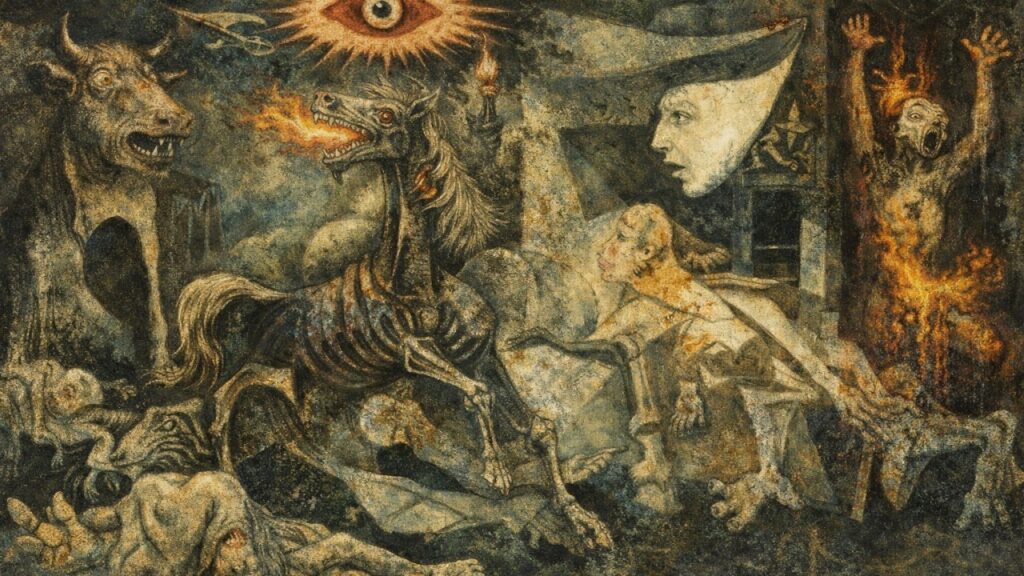
On January 3rd, 2026, the United States military conducted a kinetic strike operation. What made it historically unprecedented was not its target, its scale, or its authorization. It was this: the most advanced artificial intelligence system in the world — Anthropic’s Claude, embedded in classified Pentagon networks via Palantir and Amazon Web Services — was woven into the decision architecture.
The company that built it did not know until afterward.
Within weeks, strikes against Iran proceeded through the same hybrid intelligence infrastructure. The Pentagon’s Chief Digital and Artificial Intelligence Office had been running frontier AI across classified intelligence assessment, war simulation, and target identification for over a year. The $200 million contract that formalized this was not a research program. It was an operational doctrine.
Here is what this means for every leader reading this article:
The NEO Battlefield is no longer a metaphor. It is an operational reality.
And the only leaders built to navigate it — ethically, strategically, with any durable chance of winning — are those trained in the Vanguard way. Those who have become, in the fullest sense of the word, Centaurs.
II. What Is the NEO Battlefield?
The most important shift in business strategy is not digital transformation, globalization, or AI taken alone. It is their convergence into what I call the NEO environment — Networked, Exponential, and Orchestrated.
Networked means that competitive advantage no longer resides in the individual firm or leader. It lives in the architecture of alliances, ecosystems, and intelligence flows. The Palantir-Anthropic-AWS stack powering Pentagon AI warfare is not a technology product — it is a networked organism. Europe’s 8ra consortium — 20 nations, €3.2 billion, open-source AI infrastructure — is its civilizational counterpart. Every major strategic contest of the next decade will be decided at the network level, not the node level.
Exponential means the rate of change is not linear — it is recursive. AI systems now build better AI systems. Decision cycles that once took days collapse to hours. In the Venezuela and Iran operations, AI compressed intelligence synthesis timelines that previously required analyst teams working 72 hours into real-time decision support. The commanders who could operate at that speed, with that quality of judgment, were decisive. Those who could not were irrelevant. The gap between a leader who understands this and one who does not is not a performance gap. It is a survivability gap.
Orchestrated means that winning requires the ability to conduct, not merely perform. The Vanguard leader does not execute tasks. They design systems, align incentives, synchronize human and artificial intelligence, and hold ethical coherence across the entire ensemble. They are conductors of hybrid intelligence.
This environment was not designed for traditional MBA-trained managers.
It was designed for Centaurs. (Vanguards in our interpretation)
III. The Centaur: A Species Description
In Greek mythology, the Centaur is half human, half horse — the reasoning, ethics, and language of a person fused with the raw speed and power of an animal. In modern AI research, the term was popularized through chess: after Kasparov lost to Deep Blue in 1997, researchers discovered that a human working with a chess engine consistently defeated both the unaided grandmaster and the engine alone. The combination was superior to either component in isolation.
This finding has since been replicated across military intelligence, medical diagnosis, financial analysis, legal research, and scientific discovery. The pattern is consistent: hybrid human-AI systems outperform pure human or pure AI systems — but only when the human component possesses the right cognitive architecture.
Not every human makes a good Centaur. The human half must bring:
1. Calibrated judgment under ambiguity — the capacity to make high-quality decisions when information is incomplete, time is compressed, and stakes are existential. This is not natural talent. It is a trained capacity.
2. Ethical coherence under pressure — the ability to hold moral principles intact when institutional, commercial, and political forces push toward compromise. The Anthropic-Pentagon crisis of February 2026 is a masterclass. CEO Dario Amodei refused to remove safeguards that would have made Claude complicit in mass surveillance and autonomous lethal targeting — under direct threat of $200 million contract termination and legal compulsion. Whether one agrees with every dimension of his decision or not, the capacity to hold an ethical line under existential commercial pressure is precisely the Centaur’s distinguishing quality.
3. Systems intelligence — the ability to perceive not just the immediate decision, but second and third-order consequences across complex adaptive systems. In the NEO battlefield, every move generates cascading effects that standard analytical frameworks are not built to process.
4. Networked trust — the ability to build and sustain genuine reliability across diverse, distributed coalitions. In the 8ra model, in the COTRUGLI alumni network, in every great merchant partnership since Cotrugli’s Dubrovnik, this is the foundational asset. AI cannot manufacture it. It must be earned, at human speed, through demonstrated integrity over time.
The Vanguard Leadership program was designed to build exactly this cognitive architecture — before most institutions understood why it was necessary.
IV. Cotrugli’s Warning: The Merchant Has Always Been at War
Benedetto Cotrugli wrote The Book of the Art of Trade in 1458, in Naples, for a merchant class operating in one of the most dangerous environments in human history. The Mediterranean trade routes that made fortunes also ran through piracy, plague, religious war, shifting empires, currency manipulation, and information asymmetry so severe that a merchant’s entire enterprise could be destroyed by a rumor planted in a rival’s counting house.
Cotrugli’s response was not an ethical abstraction. It was the argument that merchant virtue was strategic infrastructure— that honesty, precision, network loyalty, and long-term reputation were not moral luxuries but competitive necessities. The merchant who lied eventually traded alone. The merchant who kept promises built coalitions that survived storms. The merchant who understood the full system — political, financial, human — won.
Five hundred and sixty-eight years later, the operational lesson is identical. Only the instruments have changed.
The Venezuela and Iran operations were not merely military events. They were proof of concept for a thesis that should alarm every business leader: AI systems integrated into consequential decision chains will be used in ways their designers did not authorize, at speeds that bypass normal governance, with effects that cannot be recalled.
This is as true in corporate strategy as in warfare. The algorithmic trading system that triggers a market cascade. The recommendation engine that destroys a brand’s reputation in 48 hours. The AI procurement system that locks a supply chain into catastrophic dependency. The pattern is identical: speed without wisdom, power without accountability, tools without Centaurs.
The Cotruglian answer is not Luddism. It is not to reject the tools. It is to insist that the leader who wields them must be built to a higher standard than the environment seems to require — precisely because the environment will eventually demand everything they have.
V. The Three Imperatives of the Vanguard Centaur
Imperative One: Master the Interface The Centaur who cannot ride cannot lead. Vanguard leaders must develop genuine fluency — not casual familiarity — with AI as a cognitive partner. This means understanding how these systems reason, where they excel, where they fail, how they can be deceived, and how to calibrate trust appropriately. This is not a technical skill. It is a command skill. The general who does not understand artillery cannot deploy it effectively. The Vanguard leader who does not understand how to work with AI at depth is navigating the NEO battlefield blind.
Imperative Two: Hold the Ethical Line When It Is Expensive The Anthropic crisis is the defining business ethics case of 2026 — not because Anthropic is perfect, but because it demonstrates what ethical coherence costs in a high-stakes environment. The line between principle and capitulation was tested at the highest level, with $200 million and an entire government market on the table. Vanguard leaders train for exactly this moment — not in theory, but through the systematic development of ethical resilience under real pressure. Cotrugli knew: the merchant who cannot say no to the wrong deal is not a merchant. He is a tool of whoever made the offer.
Imperative Three: Build Trust Architecture Before You Need It The Venezuela and Iran operations revealed the governance vacuum at the heart of AI-embedded decision systems. No mechanism existed to ensure the AI developer’s constraints were honored in operational deployment. No audit trail, no accountability layer, no trust infrastructure. This vacuum will be filled — the question is whether by democratic governance, state compulsion, or the market. The NEO Cotruglian Triple Entry system and the 8ra European open-source AI initiative represent one answer: cryptographically verifiable, ethically governed, sovereignty-preserving trust architecture for the machine economy. Vanguard leaders understand that building this infrastructure is not charity. It is a strategic positioning for the world that is arriving.
VI. The Confirmation
There are moments when the external world provides unambiguous confirmation that a framework is correct.
The developments of January and February 2026 are such a moment.
For years, I have argued that the best framework for understanding modern competitive environments is not Porter, not Blue Ocean, not even the most sophisticated contemporary frameworks in dynamic capabilities or platform economics. It is the synthesis of Renaissance merchant intelligence, Special Forces operational doctrine, and AI-augmented cognitive architecture that we call the Vanguard way.
I have been told this is too ambitious. Too heterodox. Too difficult to teach.
And then the world deploys AI in kinetic operations in Caracas without the developer’s knowledge. The Pentagon demands unrestricted access to the most powerful AI system ever built. A blockchain-verified, triple-entry trust architecture becomes the governance layer that every government on earth suddenly needs. Europe’s largest open-source AI initiative launches with a €3.2 billion mandate to build the democratic alternative.
These are not coincidences. They are the NEO battlefield, arriving on schedule.
The Centaurs who trained for it are ready.
Conclusion: The Art of Trade in the Age of the Machine
Benedetto Cotrugli ended his great work with a passage that has stayed with me since I first translated it: the merchant who masters his craft serves not only himself and his family but his city, his generation, and the civilization that made him. The art of trade, properly practiced, is an act of civilizational stewardship.
In 2026, the leaders who understand that AI is not a tool but a civilizational force — who train themselves to wield it with the precision of Special Forces operators and the ethics of Renaissance merchants — are not merely better executives. They are what civilization most urgently needs: Centaurs who know what they are fighting for, and why it matters.
The Vanguard way is not a competitive advantage.
It is a survival doctrine.